For many women, the hardest part is not just the extra weight or the slower progress. It is the feeling that your body quietly changed the rules without telling you.
You try to eat reasonably well. You make the healthier choice more often than not. You try to stay consistent. And yet the midsection stays, the scale barely moves, and the whole process feels less predictable than it used to.
That usually leads to one frustrating thought:
That question deserves a real answer, not another recycled “just eat less and move more” slogan.
Because for many women in midlife, the issue is not a lack of effort. The issue is that the body is no longer responding to the same inputs in the same way.
- ✓Old shortcuts stop working
- ✓Random “off” days feel more noticeable
- ✓Progress feels slower, less forgiving, and less consistent
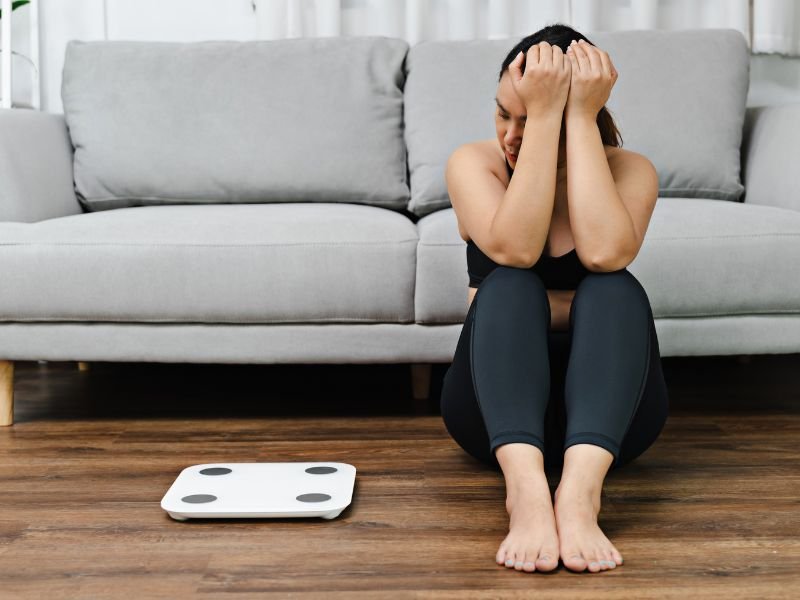
Why It Can Suddenly Feel Harder Than Before
Weight loss after 40 is still influenced by calories, but it is often not explained well by calories alone.
That is where so much confusion begins. Many people are taught to think of fat loss as a simple math problem, when in real life it behaves more like a full-body response to multiple signals at once.
Stress signals. Sleep signals. Hunger signals. Meal timing. Hormonal shifts. Body-composition changes. All of these can start to matter more than they used to.
So when someone says, “I’m eating about the same, but now it feels like everything goes straight to my stomach,” that is not always laziness talking.
Often, it is physiology.
What Often Changes After 40
1. Your metabolism may feel less forgiving
A lot of women describe this stage in almost the same words:
“I’m not doing everything perfectly, but I’m not doing anything wildly different either… so why does it feel like my body reacts so differently now?”
Part of the answer is that the body can simply become less forgiving over time. The same unstructured habits that once felt easy to recover from may now show up more clearly in your energy, hunger, cravings, and progress.
2. Hormonal shifts can change the whole experience
For many women, this stage overlaps with hormonal changes that can affect appetite, body composition, sleep quality, and where weight tends to be carried.
That matters because the experience of weight loss can start to feel different even when your effort feels similar.
Not impossible.
Just different.
3. Muscle starts mattering more than most people realize
Muscle quietly does a huge amount of metabolic work for you. It helps determine how resilient your body is to inactivity, how well you handle carbohydrates, and how much energy you burn at rest.
As muscle gradually declines with age, the body can feel less metabolically flexible. That often means fewer easy wins, less room for error, and more effort required to get the same visible result.
4. Sleep, stress, and cravings can quietly make everything harder
Sometimes the issue is not just food. It is the whole rhythm of the day.
Less sleep. More stress. More responsibilities. Less movement. Stronger evening hunger. More reactive eating. That combination can make the body feel much more protective than before.
More often, several small things started changing at the same time — and the old approach no longer fits your current reality as well as it once did.
Why Stricter Dieting Usually Makes Things Worse
When results slow down, the natural reaction is usually to push harder.
That feels logical in the moment, but it often backfires.
- ✓Energy drops
- ✓Cravings get stronger
- ✓Night eating gets harder to control
- ✓The whole process starts feeling punishing instead of productive
The problem is not always lack of effort.
The problem is that a harsher plan often creates more instability instead of more progress.
What usually works better?
After 40, weight loss is often less about becoming stricter and more about becoming more biologically intelligent.
In plain English: you usually need a plan that supports muscle, steadier energy, better meal structure, and a calmer daily rhythm — not just another week of white-knuckle restriction.
What Works Better Instead
The women who tend to do better in this phase are not always the ones being the most extreme.
They are often the ones creating more predictability.
- ✓Simpler meals that are easier to repeat
- ✓Less random grazing throughout the day
- ✓A calmer eating rhythm with less guesswork
- ✓A routine that still works on stressful days
After 40, a calmer plan often works better than a more aggressive one.
The goal is not perfection. It is creating a pattern your body and your routine can actually work with.
A Practical Quick-Start Guide
Here are four simple habits that tend to make a bigger difference than people expect.
Aiming for a more protein-rich first meal often makes the whole day easier. It can help with satiety, reduce late-morning hunger, and support muscle better than a carb-only start.
Walking is great, but after 40 it helps to actively defend muscle. Two or three simple full-body sessions per week can send a very different signal than dieting alone.
This is one of the least glamorous habits and one of the most practical. A short post-meal walk can help your body handle meals more smoothly and reduce that heavy, sluggish feeling.
Morning light, more regular meal timing, and a calmer nighttime routine can help the day feel less chaotic and make appetite and energy feel more predictable.
None of this is flashy. That is exactly the point.
Most women do not need a more extreme protocol first. They need a more stable foundation first.
Your practical next step is already on the way
You’ve already unlocked the full explanation here on this page. I also sent the practical follow-up guide to your inbox so you can save it and use it later.
It’s called Intermittent Fasting Formula, and it shows one simple way to create more structure around meals, reduce random eating, and make consistency feel easier.
Before You Blame Yourself
There is one mindset shift that matters more than most:
And once you stop treating this as a character flaw and start treating it as a transition that needs a smarter strategy, the whole process usually becomes less punishing and much easier to trust.
That is the real shift.
Less blame. More structure. Less randomness. More support for the body you actually have now.
Check Your Inbox For The Formula
I already sent the Intermittent Fasting Formula to your email. It’s the practical next step after this article and shows one simple way to create more structure around meals without making things feel more extreme.
✓ Formula already sent to your inbox
✓ Includes the practical next step after this article
✓ Worth saving for later reference
Here’s how to find it
Look for an email from Grace from RitualBoost. If you don’t see it in your main inbox, check your Promotions or Spam / Junk folder. If it landed there, move it to your main inbox before opening it so you don’t miss the next note.